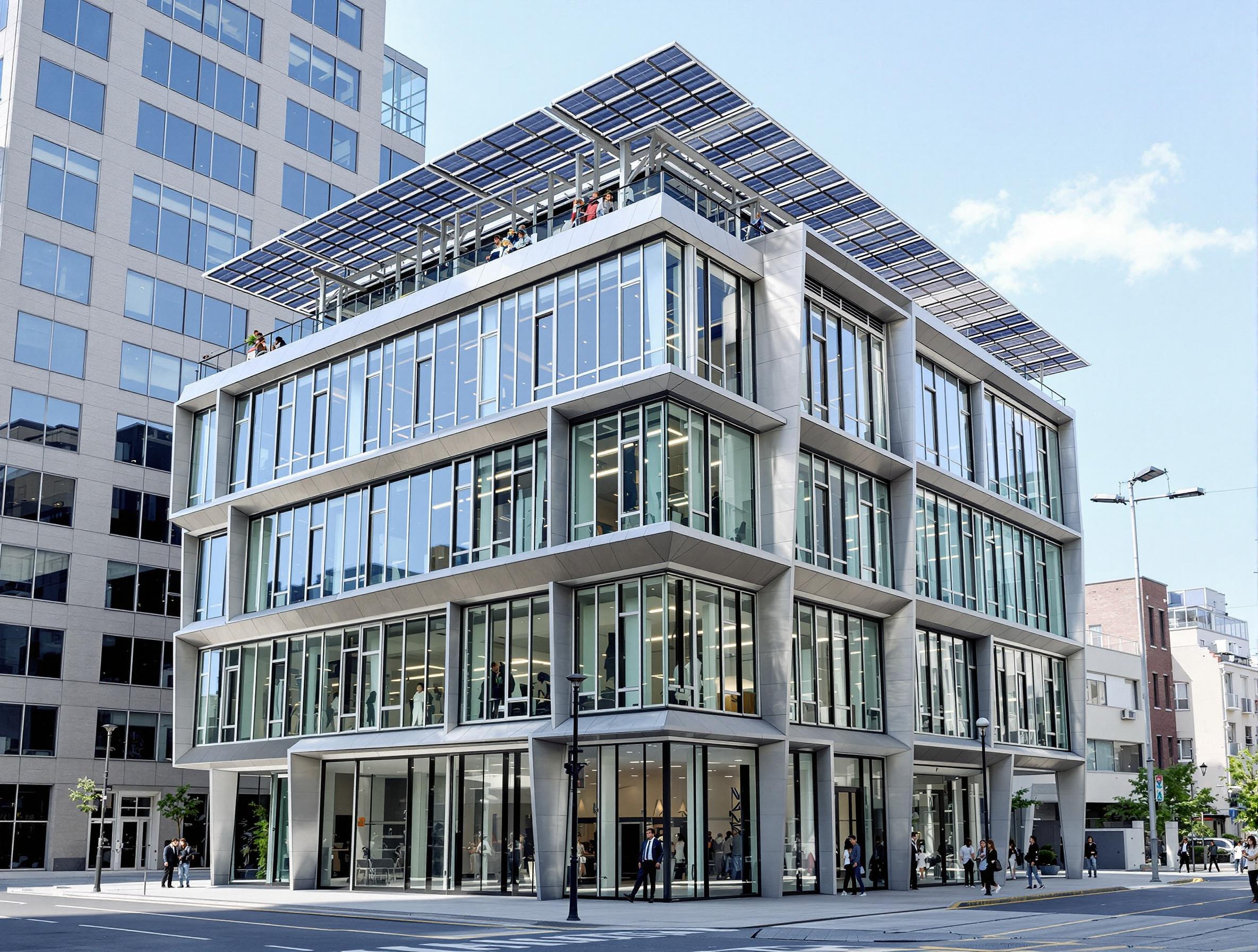
Integrating photovoltaic panels from the design of buildings has become a pillar of sustainable architecture. This approach, called ‘bipv’ (Building Integrated Photovoltaics), transforms facades, roofs and even windows into renewable energy sources, while optimizing aesthetics and energy performance.
An aesthetic and functional solution
The solar panels are no longer confined to the roofs: they now integrate with the facades in the form of Solar tiles, photovoltaic glazing or sunscreens. These innovations make it possible to produce electricity without altering the design of the building. For example, the turn Edge in Amsterdam, covered with solar panels, generates all the energy necessary for its operation.
A response to energy issues
Buildings represent 40% of global energy consumption. Integrated photovoltaics reduce their dependence on the electricity grid and limit CO₂ emissions.
In France, the Force Publique encourages the production of renewable energy for new constructions.
Economic and ecological advantages
Although the initial investment is higher, the savings on energy bills and public aid (such as ADEME subsidies) make these facilities profitable in the long term. In addition, solar panels improve thermal insulation, reducing heating and air conditioning.
A promising future
with technological advances, such as panels bifacials or the cells Perovskites», the energy efficiency of photovoltaic buildings continues to improve. The integration of solar thus becomes a standard for new and renovated constructions.

Manage consent
Strictly necessary cookies Always active
These cookies are essential for the functioning of the site.
Preferences
The technical storage or access is necessary for the legitimate purpose of storing preferences that are not requested by the subscriber or user.
Google Analytics
The technical storage or access that is used exclusively for statistical purposes.
The technical storage or access is necessary for the legitimate purpose of storing preferences that are not requested by the subscriber or user.
Marketing
The technical storage or access is required to create user profiles to send advertising, or to track the user on a website or across several websites for similar marketing purposes.