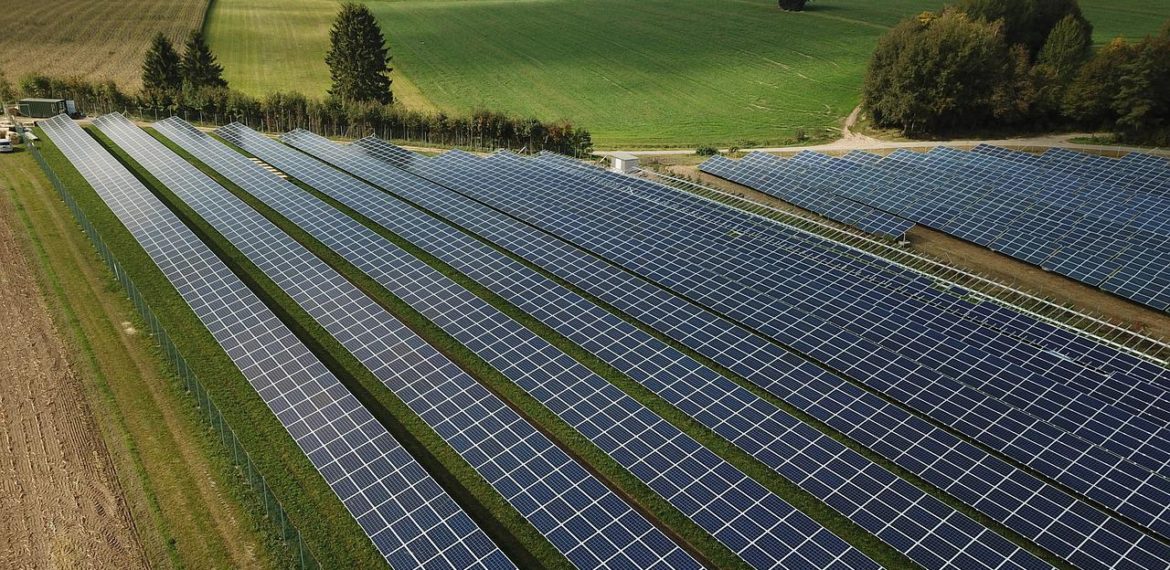
It is often said that solar energy has no impact on the environment. This is correct if we only take into account the phase of use of photovoltaic panels. Their manufacture, on the other hand, is not neutral, but this technology remains one of the most interesting from an environmental point of view. We tell you more!
Do solar panels pollute?
Like any manufactured equipment, the solar panel is made up of materials whose extraction and transformation can have an impact on the environment. Today, the majority of photovoltaic panels are made in China. A choice that is explained by the fact that China has developed real know-how in the manufacture of photovoltaic cells but also because the raw material (silicon) is already on site, and in large quantities. The manufacture of the panels in the factory requires a lot of energy, in particular to crystallize the silicon and to melt the glass. This energy-intensive process as well as the release of silicon into the atmosphere have an impact on the environment. However, factories are modernizing and investing in systems to make solar panel manufacturing cleaner. As for the energy used for the manufacturing process, it tends to become greener. The share of photovoltaic energy in the Chinese energy mix is indeed increasing every year. To limit the impact of the production of solar panels on the environment, European and even French manufacturers have also entered the market. Enough to reduce the environmental impacts of the sector throughout the manufacturing chain.
To find out if solar panels pollute, you must also take an interest in their energy debt. Indeed, according to ADEME, a photovoltaic module takes between 1 and 3 years (3) to produce in return the same quantity of energy that was necessary for its manufacture. By producing green energy for about 25 years, solar panels therefore make it possible to reduce the impact of energy production on the environment, in particular if we compare them to nuclear, gas or coal.
Do solar panels recycle?
The solar panels are subject to UV rays but also to bad weather. It is therefore normal for the materials to degrade over time. However, they are designed to last about 25 years maintaining a maximum of their abilities. According to ADEME (Environment and Energy Management Agency), solar panels lose an average of 20% efficiency after 20 years of use. Their lifespan is therefore quite long, but when it is time to replace them, are they really recycled? as specified greenpeace, solar panels are recyclable between 95 and 99% for most manufacturers. Their impact at the end of their life can therefore be drastically reduced thanks to the recycling sectors present in France and Europe. Almost all of the mass of photovoltaic panels can be recycled. This is particularly the case for infinitely recyclable glass or aluminum, which can be recycled into cans for example. Metals present in smaller quantities such as copper and silver are also melted to be reused. As for silicon, it can be recycled several times, in particular to manufacture new photovoltaic cells. Moreover, since 2014 and the European WEEE directive (1), manufacturers of solar panels have the legal obligation to take back end-of-life equipment for free and to participate financially in their recycling.
When are there rare earths?
Rare earths are often talked about when it comes to the manufacture and recycling of solar panels. These metals whose extraction and refining are a real source of pollution are used in many technological products such as smartphones. However, contrary to popular belief, most photovoltaic panels are devoid of rare earths. As a general rule, the panels are made using crystalline silicon. It is an element extracted from sand or quartz and which is 100% recyclable like glass. Rare earths are actually present in less than 10% of photovoltaic technologies according to Greenpeace (2).
A source of energy with many advantages
If solar energy is more and more popular, it is in particular because the sun is a clean and inexhaustible source of energy. The use of photovoltaic panels is all the more interesting since it does not release carbon dioxide into the atmosphere or greenhouse gases, unlike fossil fuels. Without forgetting that the panels are largely recyclable, which further limits their impact on the environment. The solar energy source also has significant advantages for consumers. Whether you are one business, a farmer or a community, the installation of solar panels allows you to take advantage of an economic energy that you can even resell. Without forgetting that the installation of this type of equipment gives you the right to financial aid that allows you to quickly make your project profitable. To find out more, do not hesitate to contact us!
(1) https://www.ecology.gouv.fr/solaire
(2) https://www.greenpeace.fr/impact-environnemental-solar/
(3)https://librairie.ademe.fr/cadic/1910/guide-pratique-electricite-solaire.pdf?modal=false

Manage consent
Strictly necessary cookies Always active
These cookies are essential for the functioning of the site.
Preferences
The technical storage or access is necessary for the legitimate purpose of storing preferences that are not requested by the subscriber or user.
Google Analytics
The technical storage or access that is used exclusively for statistical purposes.
The technical storage or access is necessary for the legitimate purpose of storing preferences that are not requested by the subscriber or user.
Marketing
The technical storage or access is required to create user profiles to send advertising, or to track the user on a website or across several websites for similar marketing purposes.