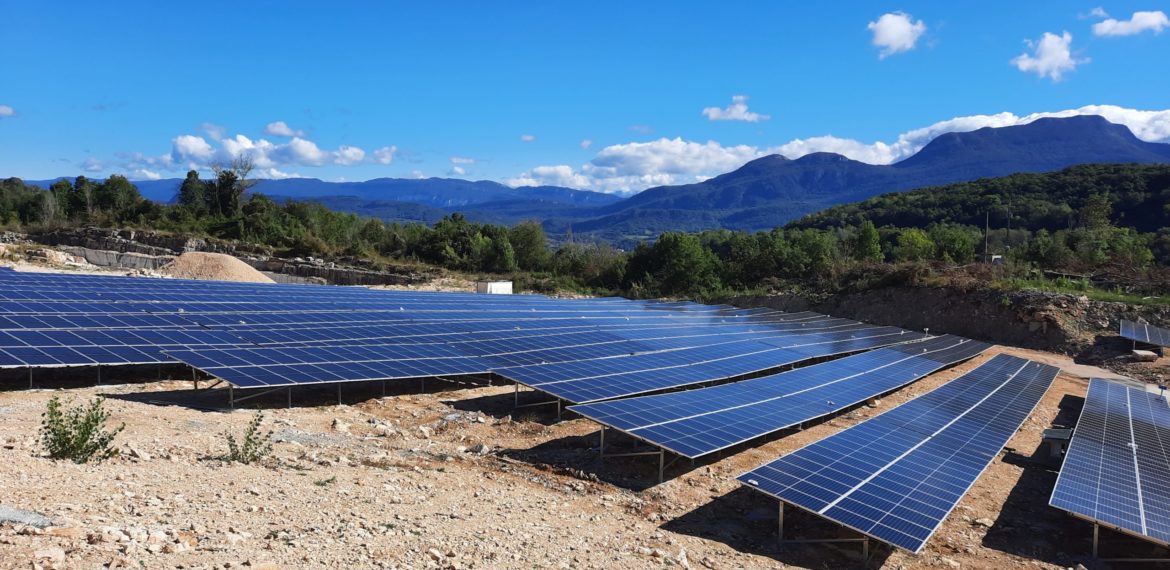
The Solar farms, also qualified as photovoltaic farms, are solar power plants that municipalities can install on lands of several hectares. They are often assimilated to fields of solar panels and make it possible to respond to many social, economic and environmental issues.
If the Solar farms are large-scale projects, it is because they involve Important facilities. For an average of 266 solar panels, land of at least 505 m² is necessary. In addition, these photovoltaic installations must respond to constraints In terms of solar radiation, inclination and temperature so that the efficiency of the solar panels is optimal.
However, photovoltaic farms stand out as a major investment in the energy transition of municipalities. They make it possible to produce green electricity for companies, homes and all local authorities. Issues, installation, impacts on biodiversity: here is everything you need to know about the advantages of solar farms in local authorities!
The challenges of the sustainable development of local authorities
Solar farms, an advantage for municipalities
Since the beginning of 2022, it is estimated that the Electricity prices have experienced a 4% increase, for a Average increase of 50.8% in the price of monthly invoices For consumers. These alarming figures highlight the impact of energy inflation, the repercussions of which concern both the largest companies in the world and small households.
In this context, opt for solutions ofCollective self-consumption can be an asset for local authorities. Indeed, solar farms are real sustainable developments that can allow municipalities to benefit from multiple benefits :
- reduce its carbon footprint in favor of the Energy transition of the municipality;
- · Fight against energy poverty by offering residents new electrical services, which improves their quality of life;
- limit the impact of changes in Energy Price on operating expenses;
- · Win in Energy autonomy by securing part of its supply;
- promote the Energy decentralization by developing short circuits for electricity;
- · Enhance the untapped areas of the municipality by giving them a new use.
In short, the installation of solar farms makes it possible to develop theAttractiveness of local authorities thanks to photovoltaic.
Benefits generated by photovoltaic farms for citizens of local authorities
The exploitation of solar energy within local authorities is a major asset that also benefits citizens. Indeed, the inhabitants of municipalities with solar farms can benefit from the following advantages:
- · Consuming green energy, local and decarbonated without having to bear significant installation costs and technical constraints;
- benefit from important Savings on electricity bills without having to pay additional local taxes;
- get news Job promises In order to install, maintain and repair the solar farms in the municipality;
- · Be aware of Renewable energy issues By gathering around a noble cause and promoting social cohesion.
The photovoltaic installations of local authorities generate an increase in labor requirements. In fact, the creation of new positions is in addition to the Social and collective benefits who are encouraged by these investments. Solar farms are able to become new wealth for the territory that hosts them. they are one Reliable and sustainable solution to counter the energy crisis While accelerating the energy transition at the scale of the municipality!
Photovoltaic farms: what impact on biodiversity?
The production and consumption of renewable energies aim to reduce greenhouse gas emissions and, by extension, to combat global warming. It is in this ecological dynamic that the new France’s development objectives concerning renewable energies. Over the periods 2018-2023 and 2024-2028, France intends to put in place solutions to reduce its energy consumption by half by 2050. Several actions also encourage the public authorities to optimize their energy management. In fact, the installation of Solar farms in communities seems to be a fundamental asset to follow this dynamic and promote the production of green energy.
However, the production of renewable energy within local authorities is likely to have Environmental impacts. This is what a recent study Allows to illustrate. The state of the art of the impacts of renewable energies on biodiversity, soils and landscapes, and the means for evaluating these impacts Allows you to present the backlash that the installation of solar farms on biodiversity can have.
To avoid altering the balance of the biodiversity in the municipalities, the Implantation site of each solar farm must be correctly selected. Some spaces can be privileged and others should be avoided in order to minimize environmental impacts. It emerged that the solar farms of the local authorities should not be installed on protected sites or on agricultural, forest, natural or during operation. Conversely, these photovoltaic installations can invest in Degraded or low agronomic value sites. They thus make it possible to respond to the challenges of municipalities without their impact on biodiversity altering their relevance.
In short, theInstallation of solar farms in local authorities turns out to be an asset for both the municipality and its inhabitants. Encouraging the energy transition while fighting against rising energy prices, this alternative offers better living comfort, new sustainable solutions and is able to respect biodiversity. Photovoltaics are thus similar to a New attractiveness factor for municipalities.
__________
Sources:
https://ekwateur.fr/farm-solar
https://www.morbihan.gouv.fr/content/download/45435/327126/file

Manage consent
Strictly necessary cookies Always active
These cookies are essential for the functioning of the site.
Preferences
The technical storage or access is necessary for the legitimate purpose of storing preferences that are not requested by the subscriber or user.
Google Analytics
The technical storage or access that is used exclusively for statistical purposes.
The technical storage or access is necessary for the legitimate purpose of storing preferences that are not requested by the subscriber or user.
Marketing
The technical storage or access is required to create user profiles to send advertising, or to track the user on a website or across several websites for similar marketing purposes.