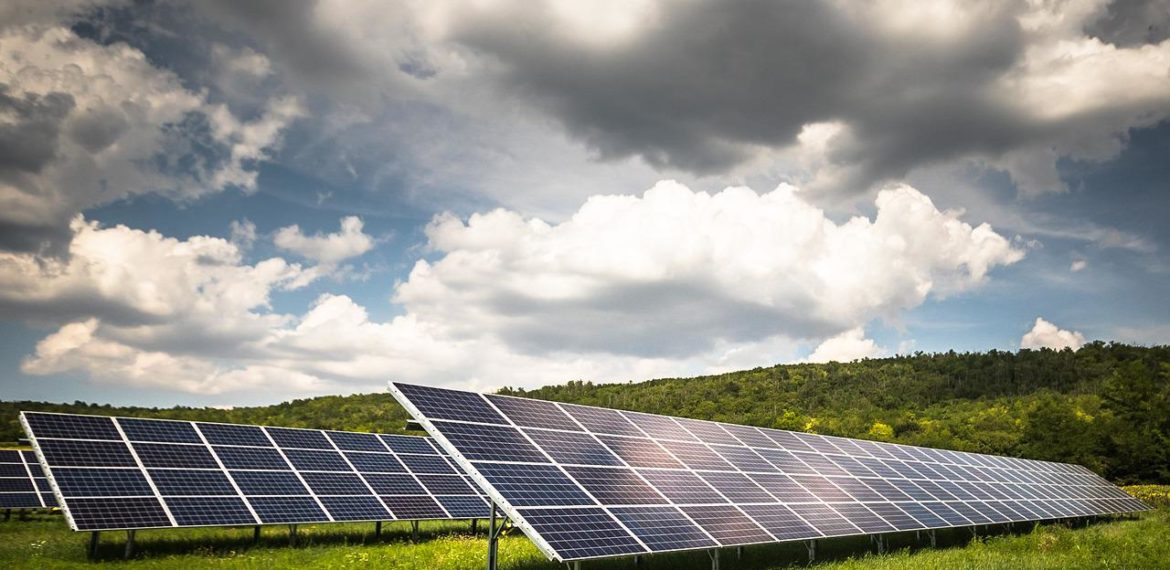
If you want to set up a photovoltaic power plant project on the ground, you will have to carry out different administrative procedures. Impact study, planning authorization, connection request or purchase contract, it is easy to feel lost. To help you see more clearly, we therefore detail the different stages of your project and the contacts to contact.
Contact the town hall for town planning rules
The first thing to do when you want to install photovoltaic solar panels, on the roof or on the ground, is to contact your town hall. It is she who will issue you the planning authorization that will allow you to start your work. Before making your request, remember to consult the Local Urban Plan (PLU) of your municipality in order to know the different constraints to be respected. You will then have to file a simple prior declaration of work or obtain a building permit according to the dimensions and the power of your plant on the ground. the regulations concerning the Planning authorizations For the installation of solar panels on the ground is as follows:
- No authorization required for: plants less than 1.80m high and less than 3kW
- Pre-declaration of work for: installations less than 1.80 m high and with a power between 3 and 250 kW
- Pre-declaration of work for: plants over 1.80m high and with a power between 3 and 250 kW
- A building permit for: ground-based photovoltaic plants with a power greater than 250 kW, regardless of their size
In some cases, it is not the town hall but the prefecture which is authorized to submit the planning authorizations. This is particularly the case for installations built on behalf of the State and for installations whose share of self-consumption is not the majority*.
Carry out an impact study
The impact study is mandatory for all ground photovoltaic power plants with a power greater than 300 kW **. This study is fundamental to prevent the environmental and social consequences of large-scale projects but also to shed light on the public decision. In your file, you will therefore have to gather information concerning landscapes, human activities, fauna or flora in order to demonstrate that your installation will not cause serious nuisances. To help you carry out this impact study, you can inquire with the administrative and technical services of the prefecture or contact organizations such as theAdeme (Environment and Energy Management Agency) or the Conservatoire du Littoral. Other services at the national or departmental level can also help you carry out your impact study. This is particularly the case of the Regional Directorate for Agriculture and Forestry (DRAAF), the Regional Directorate for Environment, Planning and Housing (DREAL), the Departmental Directorate for Territories and the Sea (DDTM) or the Departmental Architecture and Heritage (SDAP).
Make a network connection request
Once you have started your work, you have an obligation to declare it to the electricity network manager. Depending on your municipality, it can be Enedis or a local distribution company (ELD). If your installation is greater than 36 kVA, you must request the connection of your photovoltaic power plant to the ground. Remember to do this as early as possible to limit the setbacks. At the same time, you will also have to have an authorized technician checked for compliance with your installation in order to obtain your electrical compliance certificate. consual.
Contact EDF OA for a redemption contract
Once your solar installation is operational, you will be able to reduce your energy bill by using the one you produce as a priority. If you produce more than you need, you can also resell it via a redemption contract. To do this, simply contact EDF obligation to purchase. The historic supplier has been mandated by the State since 2000, so it has an obligation to buy back the excess solar energy produced. To be able to sign your redemption contract, you will first have to be connected to the network and have obtained your Consuel certificate. The EDF OA redemption contract is generally for a period of 20 years and allows you to benefit from a purchase price set by the State.
And if you wish to be accompanied during all these administrative procedures, you can trust our IRISOLARIS experts. Contact us to discover our solutions for solar power plants, photovoltaic roofs, greenhouses and solar sheds.
Sources:
*https://www.legifrance.gouv.fr/codes/article_lc/legiarti000034644346/

Manage consent
Strictly necessary cookies Always active
These cookies are essential for the functioning of the site.
Preferences
The technical storage or access is necessary for the legitimate purpose of storing preferences that are not requested by the subscriber or user.
Google Analytics
The technical storage or access that is used exclusively for statistical purposes.
The technical storage or access is necessary for the legitimate purpose of storing preferences that are not requested by the subscriber or user.
Marketing
The technical storage or access is required to create user profiles to send advertising, or to track the user on a website or across several websites for similar marketing purposes.